Back
ERP for the company – Microsoft Dynamics 365 as an enterprise-class management system
January 15, 2026
INSIGHT

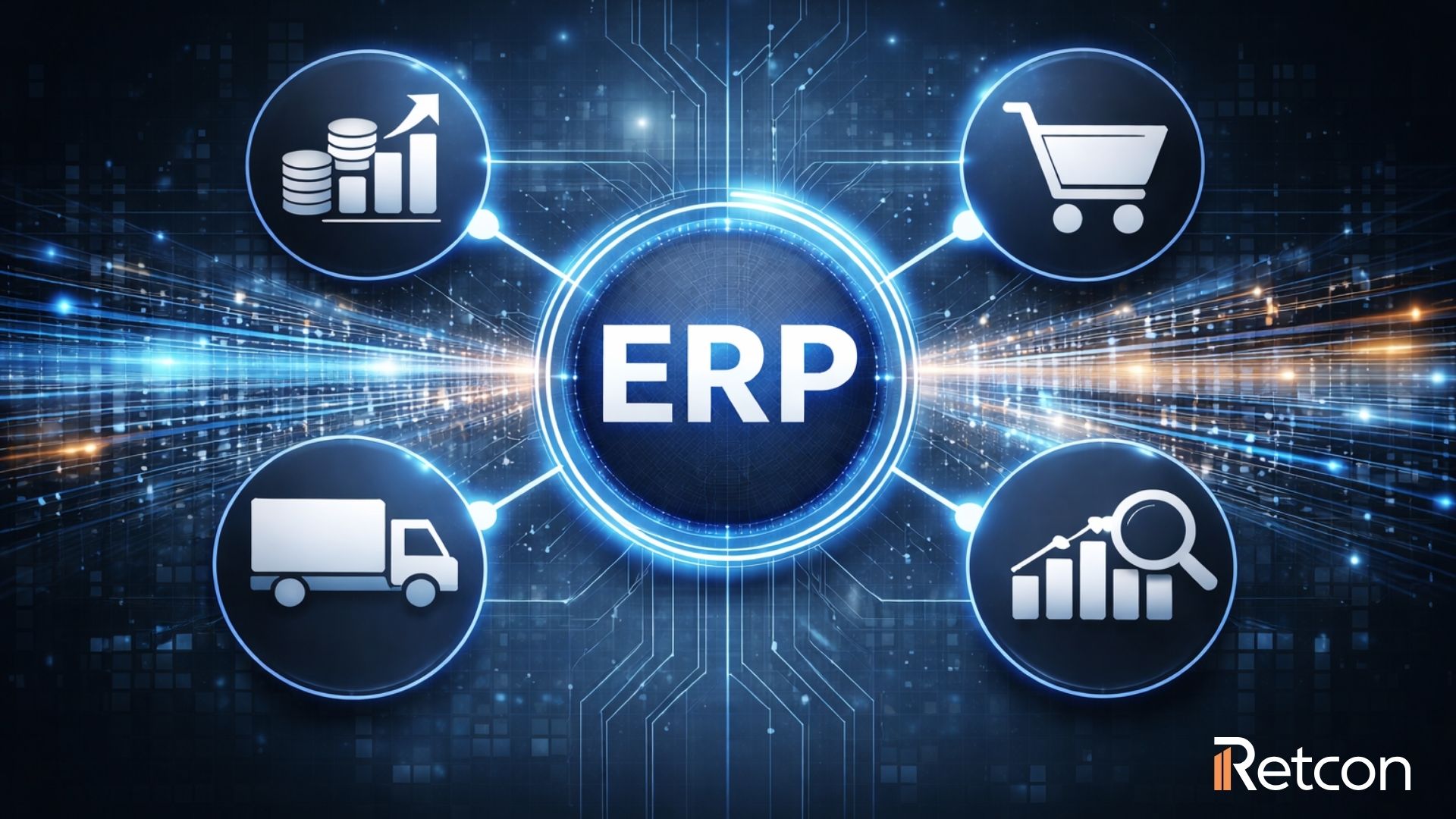
ERP for the company has ceased to be a system that supports administration. In modern organizations, it plays the role of a central management mechanism in which financial, operational, logistics and sales data are combined. The quality of an ERP system directly affects a company's ability to scale operations, control costs, and make decisions based on current information.
An ERP system that does not work in real time, does not ensure data consistency and does not adapt to organizational changes, becomes a barrier to development. Microsoft Dynamics 365 is designed to address these limitations.
Microsoft Dynamics 365 is an ERP platform designed in a cloud-first model. This means that the system architecture considers scalability, security and continuous development from the start without the need for costly infrastructure upgrades.
A key feature of Dynamics 365 is a unified data model. All areas of the company's activities operate on the same information structure, without replication and synchronization delays. Thanks to this, ERP for a company is not a set of independent modules, but a single coherent decision-making system.
The official description of the system can be found on the Microsoft website:
https://www.microsoft.com/pl-pl/dynamics-365/what-is-dynamics-365
In the area of finance, Microsoft Dynamics 365 offers much more than classic accounting. The system enables multi-dimensional controlling, real-time profitability analysis and full control over cash flows. Financial data are available at the time of the occurrence of economic events, and not only after they have been processed.
For management, this means the ability to make decisions based on up-to-date data, without delays and manual statements. ERP for the company in this approach becomes a capital and risk management tool.
Detailed documentation of the finance area:
https://learn.microsoft.com/en-us/dynamics365/finance/
Dynamics 365 integrates inventory, warehouse, and supply chain management into a single environment. The system enables full traceability of goods, demand planning and optimization of inventory levels based on historical and current data.
ERP for a company operating in multiple warehouses or markets must provide central control while maintaining local operational flexibility. Dynamics 365 implements this model without losing process and data consistency.
Documentation of the Supply Chain Management area:
https://learn.microsoft.com/en-us/dynamics365/supply-chain/
Modern enterprises operate in parallel in many sales channels. Dynamics 365 supports B2B and B2C sales in a single system, ensuring consistency of customer, order, and fulfillment data.
The development of the company does not require changing the ERP platform. New companies, markets, currencies and organizational structures can be launched under the same system architecture. ERP for the company ceases to be a limitation of growth, and becomes its foundation.
In Dynamics 365, analytics is an integral part of an ERP system. Operational and financial data are available in real time, without the need to replicate them to external warehouses.
For organizations, this means a single version of the truth, ongoing control of margins, costs and process efficiency, and the elimination of manual reporting. An ERP for a company that does not provide decision data does not fulfill its strategic role today.
Microsoft Dynamics 365 uses automation and artificial intelligence mechanisms in areas that directly affect a company's bottom line. Demand forecasting, inventory optimization or automation of accounting processes are operational elements, not marketing add-ons.
ERP for the company stops working reactively. The system supports predictive management and reduces the risk of delayed decisions.
ERP implementation is not a technical project. It is a transformational project that requires process analysis, informed architectural decisions and adequate data preparation.
For Dynamics 365, it is critical to limit excessive modifications to the configuration and to plan for the development of the system after the production run. ERP implemented without design discipline generates costs, not value.
ERP for a company is a strategic decision with long-term consequences. Microsoft Dynamics 365 offers a cloud architecture, a consistent data model, and capabilities spanning finance, logistics, sales, and analytics in one system. Real-time data access and automation and AI mechanisms enable effective enterprise management in conditions of dynamic market changes.
The ERP system, which is to be the foundation of management for the coming years, must be flexible, scalable and technologically resilient. Dynamics 365 meets these requirements.
Detailed technical information, functionality descriptions and business scenarios for ERP for a company based on Microsoft Dynamics 365 are available in the official Microsoft Knowledge Base:
These materials allow you to move from a general understanding of ERP for a company to a detailed analysis of the capabilities of the system in the context of specific business processes.