Why Microsoft Dynamics 365 is the future of modern ERP systems
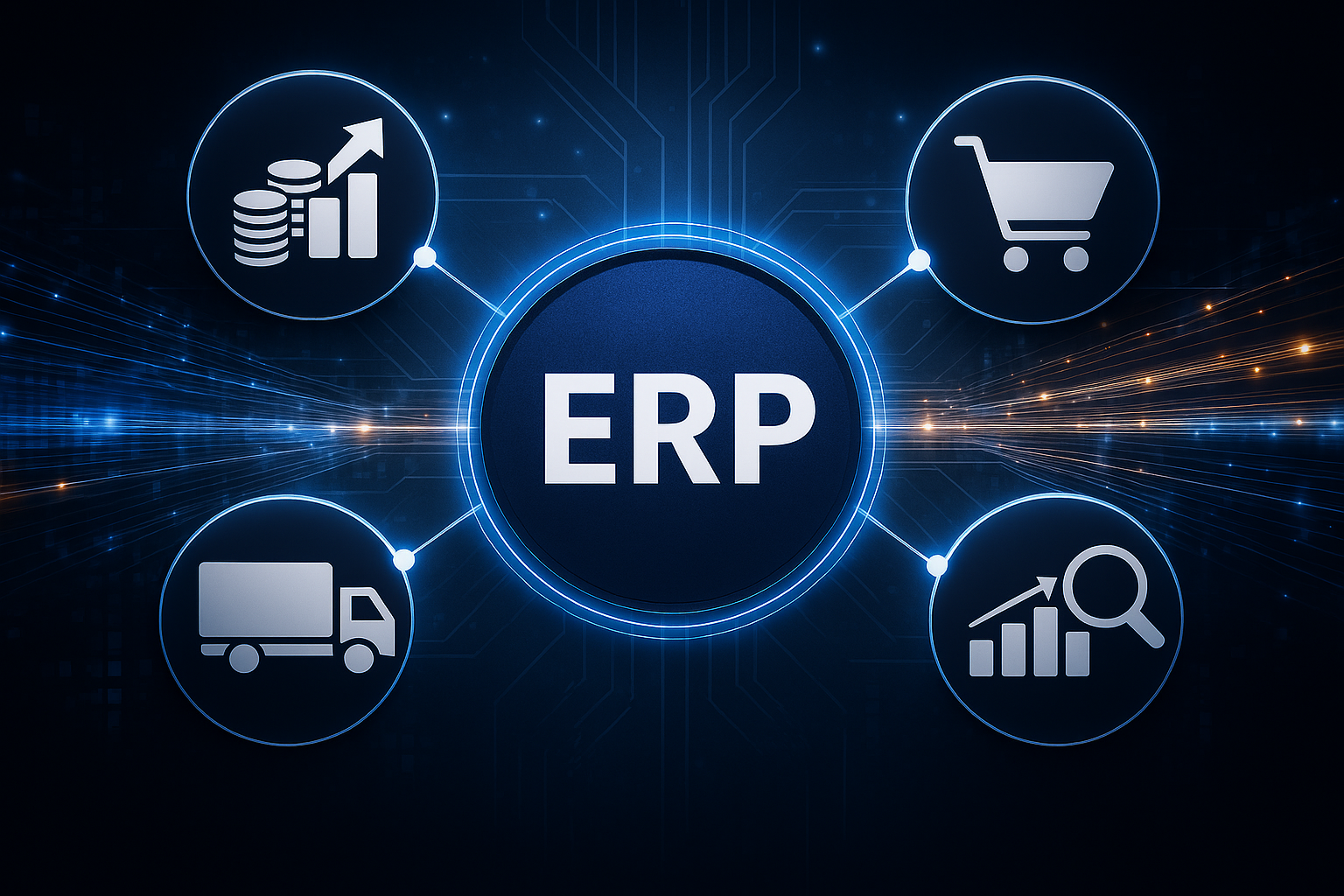
In a rapidly changing business environment, companies need ERP systems that combine automation, advanced analytics, scalability, and readiness for continuous change. Microsoft Dynamics 365 — in particular modules Finanzen, Supply Chain Management and Comercio - create a complete ERP ecosystem that realistically supports the digital transformation of the organization and shortens the time to achieve business value.
For planning companies ERP system implementation, it is crucial not only to choose the right technology, but also to choose experienced implementation partner. Microsoft provides intelligent tools based on AI, and a good partner (e.g. Retcon) is responsible for their proper application in a real business environment, in accordance with best practices and methodologies Success by Design.
Key features of the Microsoft Dynamics 365 ERP system.
- Modularity and consistency Finance, SCM and Commerce operate in a single ecosystem, simplifying integrations and reporting.
- AI and Automation — Intelligent recommendations, forecasts, workflows and data-driven assistants.
- Cloud and Scalability — fast deployments, regular updates, enterprise-class security.
- Analytics and reporting — insight into operational and financial data in near real time.
How does Dynamics 365 support the digital transformation of companies?
- Faster decision making with real-time analytics and reporting.
- Flexibility of processes — easier changes and rollouts to new markets.
- Standardization and Compliance Support for multilingualism, multicurrency and regulation in many countries.
Microsoft Dynamics 365 Finance - a key ERP module for finance and accounting
What is Microsoft Dynamics 365 Finance?
Microsoft Dynamics 365 Finance is an ERP module responsible for the complete management of the company's finances: accounting, controlling, budgeting, reporting and tax compliance. It provides a single, consistent source of financial data for the entire organization — regardless of the number of companies, countries and currencies.
The system automates key financial processes, shortens the closing time of periods and increases control over liquidity and profitability. Built-in analytics and forecasting mechanisms allow you to quickly identify deviations and respond to changes in results.
Key features of Dynamics 365 Finance
- Automation of closures and accounting arrangements.
- Forecasts of cash flows and receivables with the use of AI.
- Advanced reporting and dashboards for CFO/Controlling.
- Global Compliance tax, multilingualism and multicurrency.
For which companies is the Finance module best?
- Multidepartmental organizations and capital groups.
- Companies operating in multiple markets/regions.
- Companies that want to shorten the closing of the month and improve controlling.
How does ERP improve controlling and financial processes?
- One source of truth about revenue, costs and margins.
- Planning and forecasting at the whole group level.
- Performance indicators and alerts for key processes.
Microsoft Dynamics 365 Supply Chain Management - ERP for Manufacturing and Logistics
What is Microsoft Dynamics 365 Supply Chain Management (SCM)?
It is an ERP module for supply chain management, production, warehouse, planning and logistics. It covers the full operational cycle — from demand forecasting and material planning, through production and quality control, to distribution and inventory management.
The module combines the planning, execution and monitoring of operations in a single data model. It enables rapid MRP conversions, optimization of inventory levels, and ongoing control of production capacity and operational workloads.
How does SCM increase supply chain resilience?
- Rapid response to changes in demand and supply disruptions.
- Combining planning, production, quality and logistics in one system.
Dynamics 365 SCM features that improve planning and production
- Demand forecasting with the use of AI and external data.
- Full MRP in minutes, which shortens the decision time.
- Dynamic Inventory Buffers and optimization of warehouse levels.
- Advanced production and quality, including IoT integrations.
For which industries is the SCM module the best choice?
- Discrete and process production.
- Distribution and logistics.
- Companies with distributed production and warehouse centers.
Microsoft Dynamics 365 Commerce - omnichannel and e‑commerce in one ERP
What is Microsoft Dynamics 365 Commerce?
It is an ERP module supporting multi-channel sales - e-commerce, retail and B2B scenarios. It combines online and offline sales in a single data model, covering product, pricing, promotions, orders and customer experience management.
It ensures consistency of product and transaction information across all sales channels. It enables the central management of the catalog, pricing policy and availability of goods and reduces the number of distributed integrations between the online store, POS and ERP.
Key features of Dynamics 365 Commerce for retail
- Personalize your shopping experience based on AI.
- Central management products, prices and promotions.
- Consistent data on products, orders and customers.
How does ERP support online sales and brick-and-mortar stores?
- Omnichannel: in-store pickup, home shipping, B2B/B2C, cross-channel returns.
- e‑commerce and POS integrations, one basket of data, fewer ad-hoc integrations.
Why is Commerce ideal for B2C and B2B companies?
- Ready-made sales scenarios for both models.
- Shared catalog, price lists and permissions of business customers.
- Shorter time-to-market for new channels and markets.
Microsoft Dynamics 365 ERP implementation - how does the Success by Design methodology work?
Stages of ERP implementation according to Success by Design
Strategize → Initiate → Implement → Prepare → Operate
- Strategize - Vision, objectives, scope and KPIs.
- Iniciar - project plan, governance, solution architecture.
- Implement - configuration, extensions, tests, data migration.
- Prep - readiness for organization, training, cut-over.
- Operate - post-launch support, optimization and development.
How does the Microsoft method minimize design risks?
- Architectural and quality reviews.
- Data, integration and security checks.
- Design standards for predictability.
Why Success by Design increases the effectiveness of ERP implementations
- Framework methodology based on thousands of projects.
- Clear criteria for “readiness” before go‑live.
- Measurable results and faster business value.
Retcon as a Microsoft Dynamics 365 partner — experience and references
ERP implementation is an investment for years — that's why it's so important implementation partner with industry and methodological experience. Retcon implements Dynamics 365 projects in Poland and European markets, combining practical knowledge of Finance, SCM and Commerce modules with methodology Success by Design.
Key areas of Retcon experience
- Production, distribution, retail, energy, services.
- International projects and multi-country rollouts.
- Architectural audits, project rescue, post-construction development.
What sets Retcon apart from other implementation companies?
- A team with design experience and certifications.
- Transparent approach to cost and schedule.
- Translating technology into real KPIs and a quick return on investment.
https://www.retcon.pl/o-retcon/zaufali-nam-klienci
How to choose the best company to implement the Microsoft Dynamics 365 ERP system?
What to look for when choosing a Dynamics 365 partner?
- References and case studies in your industry.
- Methodology of work (Success by Design, Quality Standards).
- Competences of the team (Finance/SCM/Commerce, integrations, cloud).
- Post-roadside support and development roadmap.
Why is implementation experience crucial?
- ERP touches on critical processes and data.
- Errors at the stage of analysis and migration cost many times more after launch.
- An experienced partner reduces risk, reduces deployment time and accelerates return on investment.
Summary - Why Microsoft Dynamics 365 is the future of ERP systems
Microsoft Dynamics 365 combines modularity, AI, and cloud scalability to deliver predictable business outcomes. Modules Finanzen, Supply Chain Management and Comercio allow companies to gain full control over their finances, operations and omnichannel sales, with implementation conducted in accordance with Success by Design minimizes risks and accelerates the achievement of goals.
Want to talk about an ERP implementation based on Microsoft Dynamics 365?
Contact us - we will prepare an implementation path tailored to your organization.
FAQ - Frequently asked questions about Microsoft Dynamics 365 ERP
1. What is Microsoft Dynamics 365 ERP?
It is a family of business modules (Finance, SCM, Commerce and others) running in the cloud that integrate the company's key processes into a single coherent ecosystem.
2. Who is Dynamics 365 Finance for?
For organizations that need full control over finances, closing automation and advanced controlling, also in multi-country and multicurrency environments.
3. What makes Dynamics 365 SCM different in manufacturing and logistics?
AI-powered demand forecasting, fast MRP, dynamic inventory buffers, and IoT integrations that increase supply chain resilience.
4. Will Dynamics 365 Commerce work for B2B?
Yes — it supports B2C and B2B scenarios, has extensive mechanisms of pricing, entitlements and business customer directories.
5. What is the Success by Design methodology?
It's a Microsoft framework methodology that breaks down the deployment into stages and introduces qualitative reviews to reduce risk and ensure a predictable outcome.
Want to talk about implementing Microsoft Dynamics 365 in your organization? Contact us - we will be happy to advise and select a solution perfectly suited to your needs.
https://www.retcon.pl/contact
📲 +48 570 530 641